
What to Look for in a Well-Made Suit
Start With the Inside, Not the Outside
Most men begin their search for a suit by running a hand over the cloth. It is an understandable instinct, because fabric is the part you can see and feel in a second. But the fabric is only the outer layer of a structure, and it is the structure that decides whether a suit will look better in five years or simply look older. Before you fall for a shade of navy or the softness of a flannel, spend a few minutes investigating what lies beneath the surface.
A well-made jacket is a piece of engineering. It has an internal skeleton that shapes the chest, supports the shoulders and allows the garment to move with you rather than against you. Once you know what to look for, you can assess a suit in minutes and avoid the expensive mistake of buying something that photographs well and disappoints in the mirror.
Check the Canvas
The single most reliable indicator of quality is the canvas inside the chest piece. Traditionally, a jacket's front is built around a layer of horsehair and wool that is stitched, not glued, to the cloth. This floating canvas moulds to your body over time and gives the chest its gentle, three-dimensional roll.
The alternative is a fused jacket, where a stiff interlining is heat-bonded to the fabric. It is quicker and cheaper to produce, and it is why so many inexpensive jackets feel board-like and develop bubbles or delamination after a few dry cleans. To test what you are holding, pinch the cloth just below the bottom buttonhole, between the button and the hem. On a canvassed jacket you should feel at least two distinct layers moving independently. A fused front feels like a single, slightly rubbery sheet.
- Pinch test: two layers that shift separately suggest a floating canvas.
- Lapel roll: a canvassed lapel curves naturally rather than lying flat like a pressed card.
- Chest feel: a light, almost quilted softness is a good sign; a stiff, papery front is not.
Read the Button Stance and Lapels
The button stance is the height at which the jacket closes, and it has a disproportionate effect on how you look. As a general rule, the middle button of a single-breasted jacket should sit near your natural waist, roughly level with your elbows or just above the navel. A stance that sits too high shortens the torso and makes the jacket look small; too low and the front gapes when you move.
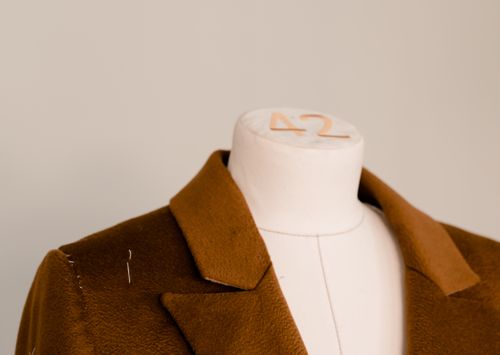
Lapel width should relate to the width of your shoulders and face. A classic range is around 8 to 9.5 centimetres at the widest point. Narrow lapels date quickly and can make a broad-chested man look pinched; very wide lapels can overwhelm a slighter frame. Look also at the notch or peak. A peak lapel adds formality and breadth across the chest, while a notch is the versatile everyday choice. On the trousers, check that the waistband sits where you actually wear your trousers, and that the rise is high enough to avoid a gap between jacket and waistband when you move.
Examine the Shoulder Line
The shoulder is the hardest part of a jacket to alter, so it must be right from the start. Put the jacket on and stand naturally in front of a mirror. The shoulder seam should end at the outer edge of your shoulder bone, neither extending past it nor stopping short and creating a divot. The sleevehead should sit smoothly, without puckering or a ridge of excess fabric.
Press lightly on the top of the shoulder. There should be a little structure, enough to hold a clean line, but not a rigid pad. Feel for the seam where the sleeve meets the body: on a well-made jacket it is often set slightly forward, and the armhole is high and snug. A high armhole restricts nothing when cut correctly and allows far more movement than the low, loose armholes found on budget garments.
Assess the Construction Details
Small details reveal the standard of make. Turn the jacket over and look at the lining seams, the buttonholes and the finishing. These are not mere decoration; they show how much time the maker was prepared to spend.
- Working cuff buttons: surgeon's cuffs indicate a higher level of handwork and let a tailor adjust sleeve length properly.
- Pick stitching: fine hand stitching along the lapel edge and pocket flaps suggests care, though it can also be imitated by machine.
- Pattern matching: stripes and checks should align across the chest, lapel and pockets. Poor matching signals rushed cutting.
- Lining and vents: a breathable lining such as cupro or bemberg wears cooler than polyester; side vents flatter most figures and allow easy pocket access.
Then, and Only Then, Consider the Cloth
With the structure verified, fabric becomes a pleasure rather than a gamble. Look for a cloth with a dry, lively hand and a slight spring when you crumple it in your fist; if it stays creased, it will look tired by lunchtime. Four-season worsted in the 260 to 300 gram range is the sensible starting point, with heavier flannels and tweeds for winter and high-twist wool or linen blends for summer.
Finally, budget for alterations. A modest suit that fits beautifully at the shoulders and is tailored through the waist will always outclass an expensive one that hangs loosely. Judge the jacket on its canvas, button stance and shoulder line first, and the cloth last. Do that, and you will own a suit that earns its place in the wardrobe for a decade or more.
tag: Tailoring

Harriet Sinclair Author
Cleanse, moisturise and apply a subtle fragrance. Keep tools clean and choose products suited to your skin type rather than following passing trends.
YOU MAY ALSO LIKE
Simple Morning Grooming Routine for Busy Professionals
Sep 17
10Full-grain leather, solid brass buckles and stitched edges are worth the investment. Match belt colour to shoe leather for a considered finish.
read more
Choosing a Leather Belt That Lasts for Years
Sep 11
10Position a wingback chair near natural light, add a side table for tea and layer wool throws for warmth without sacrificing elegant proportions.
read moreMenswear
-

ERRIC CATONA
Plan a simple menu, set the table thoughtfully and keep conversation inclusive. Good hosting is about making guests feel relaxed and valued.
May 19, 2016 at 5.12 pm
Reply
ERRIC CATONA
Charity shops in affluent areas, specialist fairs and online auctions can yield well-preserved tweed, silk ties and classic overcoats at fair prices.
May 19, 2016 at 5.12 pm
Reply -
ERRIC CATONA
Resist the urge to rush. Brew proper coffee, read a printed newspaper and take a short walk to reset your mind before the week begins.
May 19, 2016 at 5.12 pm
Reply
Grooming
Your email address will not be published.